The European Patent Office has issued a decision to grant patent EP 4462727 for
a Quantum Conference Key Agreement protocol developed at Quantum B, and its application in distributed systems. The invention combines quantum group key agreement with a method for achieving data agreement among independent computers.
Distributed systems consist of many cooperating computers, which may belong to different organizations. In solutions such as blockchain networks or multi-party data-sharing platforms, participants need a way to agree on a common version of data, even under limited mutual trust. The process of reaching such agreement is called consensus.
Quantum B’s solution uses the randomness and correlations that arise from measurements of entangled quantum states. Network participants carry out their own measurements, exchange information over the internet, and check the consistency of the data block being processed. In this way, the agreement mechanism also draws on quantum phenomena.
As Miriam Kosik, co-inventor of the solution, explains, the team investigated whether using quantum entanglement could simplify multiple participants agreeing on a result simultaneously.
This solution has its roots in research the team carried out back when it was still Quantum Blockchains, combining quantum cryptography with blockchain technology.
Mirek Sopek, CEO of Quantum B, emphasizes that since filing the application, the team has continued developing both the protocol itself and new approaches to distributed consensus. Further results will be presented as they mature.
At Quantum B, we are today developing a broader portfolio of quantum and post-quantum solutions, including our pQKD hardware platform. At the same time, we are participating in the POSEIDON project, focused on post-quantum security for European digital identity platforms.
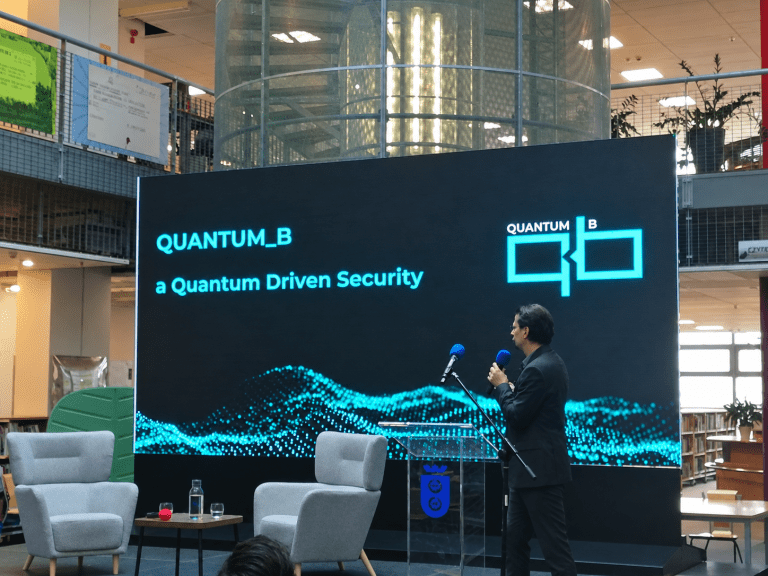
Quantum B on Preparing for Q-Day at Q-Con 2026 in Gdańsk
On 10–11 September, the Quantum B team took part in the Startup Meetup: Quantum & Space and the Q-Con Quantum Conference 2026 in Gdańsk. The Startup Meetup opened this year’s Q-Con. Paweł Kowalik, Financial & Project Manager at Quantum B,…

Quantum B at MSPO 2026: Security You Cannot See
The Quantum B team took part in the 34th International Defence Industry Exhibition MSPO, held in Kielce on 8–11 September. We met with representatives of the defence and technology sectors to discuss data protection, secure communication and preparing systems for…
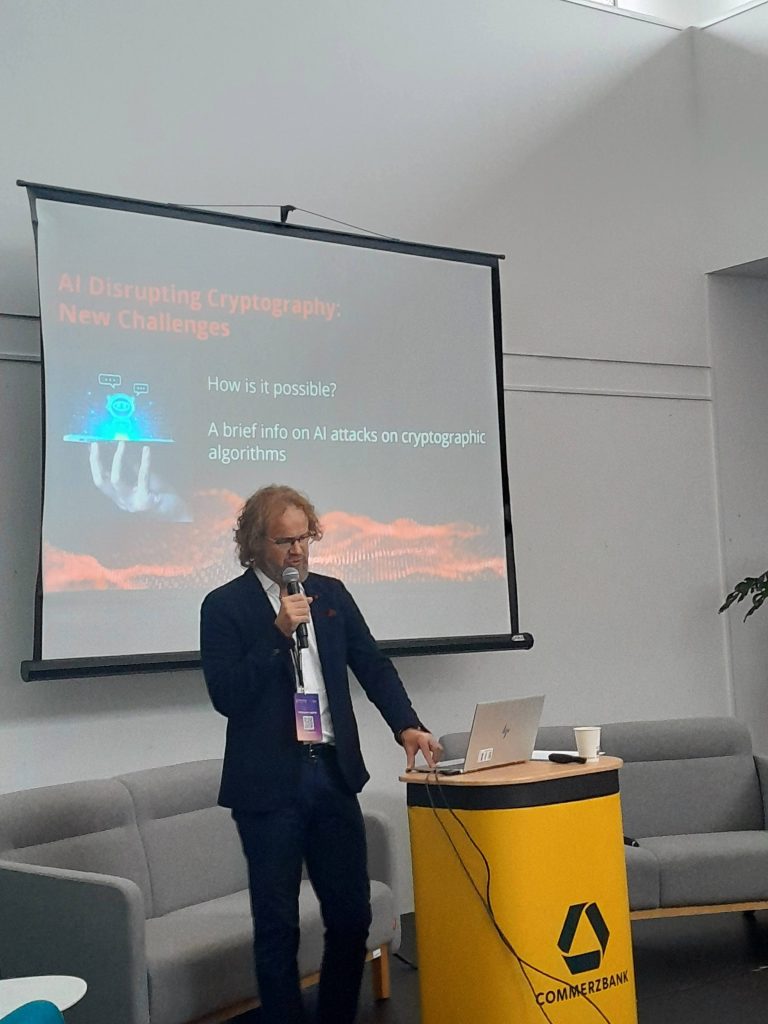
Quantum B at TechConnect 2026
TechConnect 2026, organised by Commerzbank, took place in Łódź on 4 September. The conference brought together experts from finance and IT to discuss digital transformation, new technologies and the future of security in the financial sector. One of the topics…