Google Quantum AI’s new paper sends a clear signal to the blockchain industry: the era of treating quantum risk as a distant theoretical concern is ending. The vulnerabilities of today’s cryptographic foundations are no longer a matter of abstract debate. They are becoming a strategic issue for every serious blockchain ecosystem, every digital asset platform, and every organisation building on long-term trust.
This is exactly why Quantum Blockchains was created.
From the outset, we have taken the view that the transition to the post-quantum era cannot be postponed, improvised, or reduced to a narrow technical patch. What is required is a deeper transformation: crypto-agile architectures, quantum-resilient trust models, and migration strategies that protect not only wallets and signatures, but the integrity of entire distributed systems.
What makes Google’s paper especially important is that it frames the challenge in the right way. The issue is not limited to private keys. It extends to transaction exposure, validator security, protocol design, governance, and the practical difficulty of upgrading live ecosystems without undermining trust. In other words, this is not merely a cryptographic problem. It is a systemic one.
https://quantumai.google/static/site-assets/downloads/cryptocurrency-whitepaper.pdf
That is where our company matters.
Quantum B exists to help close the gap between emerging quantum risk and deployable, credible answers. We are focused not on slogans, but on practical pathways toward quantum-resilient blockchain infrastructure and the broader adoption of quantum-safe trust technologies.
A longer post will follow shortly, in which we will explain in more detail how our approach responds to the key challenges highlighted in Google Quantum AI’s paper, and why we believe the future of blockchain must be quantum-resilient by design.
We are proud to announce that DID:QSB, the decentralised identifier method developed for our QSB Blockchain, has been added to two important catalogues of DID methods: the W3C DID Methods registry page and DID Directory. In the current W3C Group Note listing known DID methods, qsb appears as “QSB Blockchain” with Quantum Blockchains as the listed organisation.
This is an important milestone for the further development of QSB as infrastructure for European Digital Identity projects and for digital identity ecosystems more broadly. Particularly, it is important for the use of our QSB Blockchain in the POSEIDON EU project: https://poseidon-pqc.eu/ .
The W3C document serves as a public collection of known DID methods and a discovery point for developers looking for methods they may wish to implement. At the same time, the W3C note is explicit that the registry is intended as a discovery mechanism rather than an endorsement of any specific DID method.
For us, this recognition matters because discoverability and formal visibility are essential for adoption. In large-scale identity initiatives such as those related to the European Digital Identity Wallet, trust infrastructure must be not only technically sound but also visible, documentable, and easy for ecosystem participants to evaluate and integrate. Being present in recognised DID catalogues makes DID:QSB easier to find, assess, reference, and test in real-world digital identity architectures.
This strengthens the position of QSB Blockchain as a credible building block for verifiable digital identity, trust registries, credential ecosystems, and future EUDI-aligned deployments. It also supports our broader vision that digital identity infrastructure should be secure, interoperable, and ready for the next generation of trust services.
We see this as another step in making QSB relevant not only for specialised blockchain environments, but for digital identity in general — especially where resilience, trust, and long-term architectural independence matter most.
References:
W3C DID Methods registry: https://www.w3.org/TR/did-extensions-methods/#did-methods
DID Directory listing: https://diddirectory.com/listing/69b762362e774744afb04680
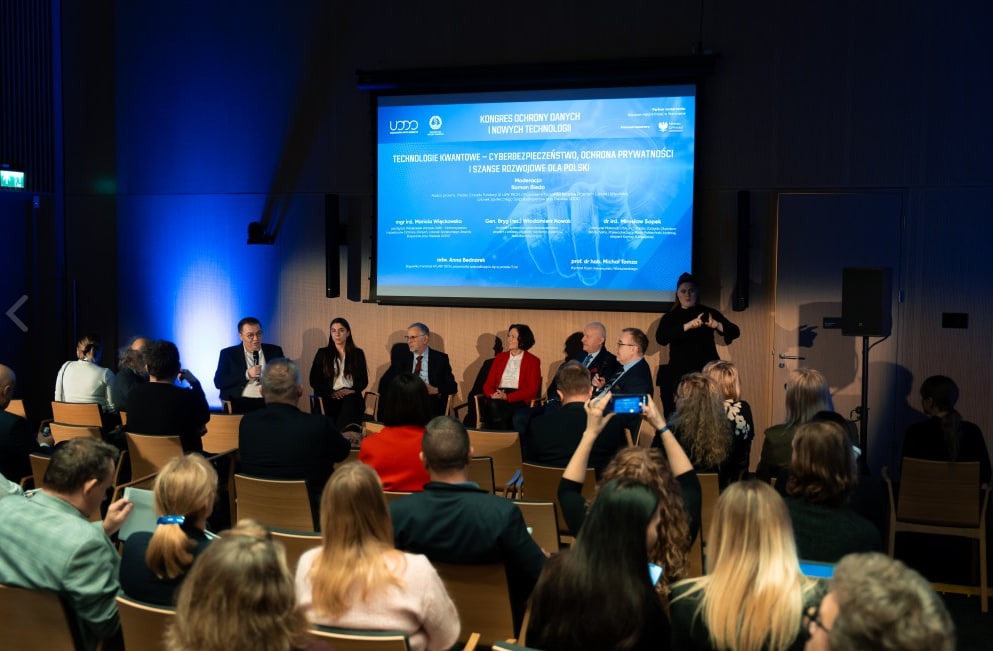
On 28 January 2026, our CEO Mirek Sopek took part in the Congress on Data Protection and New Technologies, held at the Muzeum Historii Polski in Warsaw. The event was jointly organized by the Urząd Ochrony Danych Osobowych and the Krajowa Izba Radców Prawnych.
The Congress marked the 20th anniversary of Data Protection Day, celebrated annually on 28 January to commemorate the opening for signature of Convention 108—the first legally binding international instrument protecting privacy in the digital era.
Bringing together representatives of public administration, legal and academic communities, business leaders, and experts in data protection, emerging technologies, and artificial intelligence, the Congress served as a forum for exchanging experience and debating current and future challenges in data protection amid rapid digital transformation, automation, and rising cyber threats.
Mirek Sopek participated as a panelist in the session “Quantum Technologies – Cybersecurity, Privacy Protection, and Development Opportunities for Poland.” The discussion focused on the impact of quantum technologies on data security and privacy. Panelists emphasized that quantum technologies are not merely about faster computation, but introduce fundamentally new capabilities, including the potential to decrypt data secured with traditional cryptographic methods. At the same time, speakers underlined that quantum-related risks may materialize in the coming years, affecting not only classical cryptography but also blockchain-based solutions.
Crucially, the panel highlighted that quantum cryptography offers a new, exceptionally high standard of security, grounded in a unique communication model, opening tangible opportunities for strengthening cybersecurity and privacy protection in critical systems.
We are proud to contribute to this important dialogue shaping the future of data protection and quantum-safe security in Poland and beyond.


Last year, we were proud winners of the GridUp! program, launching real-world deployments of quantum-cryptography-protected networks for PGE Dystrybucja. This year marked an important milestone in that journey: we were invited back: not as participants, but as honorary speakers at the final of the second edition of the program.
The GridUp! Final took place at Google Campus for Startups in Warsaw and brought together startups, technology companies, and research institutions working on the future of energy distribution.
Representing our team, Paweł Kowalik delivered a talk sharing insights from planning the deployment of quantum-safe security in operational energy networks. The discussion highlighted how advanced cryptography, developed by Polish SMEs, can directly support the resilience and cybersecurity of critical infrastructure.
GridUp! remains a unique initiative that bridges innovation with real operational needs, putting the idea of “local content” into practice by enabling Polish technology companies to co-create solutions with one of the largest distribution system operators in the country. The growing interest in the program, this year with even more applicants than before, confirms how essential innovation-driven collaboration is for building a modern, secure, and sustainable energy system.
We are honored to be part of this journey: from winners to speakers, and excited to continue working with PGE Dystrybucja on the future of quantum-secured energy networks.

Date:
January 13, 2026
Location:
Gliwice / Łódź, Poland
In response to the rapidly growing cyber threats posed by quantum computing and advanced artificial intelligence, Quantum Blockchains, a Polish technology company specializing in cryptographic solutions, has developed and deployed a quantum-resistant communication architecture for mobile robots, specifically AGVs (Automated Guided Vehicles) and AMRs (Autonomous Mobile Robots), manufactured by the Polish company Intrabot Robotics and used in modern industrial environments.
The project directly addresses the needs of Industry 4.0, where autonomous robotic systems have become a critical component of logistics, production, and warehousing processes, while simultaneously emerging as attractive targets for increasingly sophisticated cyberattacks.
The developed solutions meet the requirements of technological sovereignty at both European and national levels. They also constitute an important element in ensuring the strategic security of high-value warehouse and production facilities, as well as other environments that will increasingly rely on autonomous robots in the future, including hospitals and other sensitive infrastructures.
New regulatory frameworks – both in Poland and across the European Union – clearly emphasize the central role of cybersecurity. The NIS2 Directive, implemented through the forthcoming amendment to the Polish Act on the National Cybersecurity System, requires the use of appropriate cryptographic safeguards. For selected use cases – and progressively for the majority by 2035 – this level of protection is defined by post-quantum cryptographic standards.
A new class of threats requires a new class of security
Traditional cryptographic mechanisms widely used today in industrial communications are highly likely to become vulnerable in the future to attacks carried out using quantum computers and advanced AI algorithms. In robotic environments, this could enable:
- takeover of robot fleets,
- manipulation of AGV/AMR routes and tasks,
- disruption of production continuity,
- threats to the safety of personnel and infrastructure.
The solution developed by Quantum Blockchains addresses these risks through a multi-layered, quantum-resistant communication architecture combining:
- post-quantum cryptography (PQC),
- key distribution based on pQKD (Post-Quantum Key Distribution – emulated QKD communication),
- secure communication tunnels for robot control and telemetry,
- strict separation of control, data, and authorization layers.
Security without interference in robot logic
One of the key advantages of the solution is its transparency with respect to robotic systems. The architecture has been designed to:
- require no modifications to robot firmware,
- operate as an external, network-level trust layer,
- integrate seamlessly with existing Fleet Management Systems (FMS),
- be deployable both in new installations and in already operating environments.
As a result, robot manufacturers and operators can significantly increase security levels without the risk of interfering with certified control systems.
Compliance with current and future cybersecurity standards and regulations
The post-quantum cryptography implemented by Quantum Blockchains is based on the NIST standards adopted in August 2024: FIPS 204, FIPS 205, and FIPS 206 – which are globally recognized, as well as on European ETSI-QKD standards.
Regulatory frameworks in the United States, Europe, and Japan consistently identify the period 2030–2035 as the timeframe for mandatory deployment of post-quantum cryptography across economic sectors, starting with public administration and critical infrastructure, followed by key industries and ultimately the broader digital economy. In the EU, the key reference document is the Post-Quantum Cryptography Transition Roadmap.
Regulations directly affecting enterprises include NIS2 / the National Cybersecurity System, which mandates the use of “appropriate” cryptographic protections – interpreted, in light of the roadmap, as post-quantum algorithms. The upcoming Cyber Resilience Act will, from 2027, require cybersecurity certification for all products containing digital components, including verification of the cryptographic mechanisms used.
Cybersecurity as a market advantage
Actions taken by regulatory authorities, as well as non-regulatory requirements such as procurement and tender criteria related to cybersecurity of processes, products, supply chains, and entire enterprises, clearly indicate that cybersecurity will become a decisive factor in market competitiveness. This is explicitly highlighted in the National Cybersecurity Strategy (Project 2025).
Public entities, operators of essential services, and managers of critical infrastructure will be increasingly encouraged – and in many cases required – to adopt the highest cybersecurity standards. Early adopters of post-quantum cryptography may benefit from preferential access to services and projects linked, directly or indirectly, to critical and strategic areas of state activity.
Statements from the companies
“Mobile robots are rapidly becoming an integral part of the critical infrastructure of industrial facilities. Their communication security cannot rely on solutions that may become vulnerable to quantum or advanced AI attacks within the next decade,”
said Mirosław Sopek, Founder and CEO of Quantum Blockchains.
“Looking ahead, our cooperation with Quantum Blockchains has introduced a level of cybersecurity into our solutions that is truly innovative on the market. We are the first AMR supplier to provide such a high level of communication security,”
said Bartłomiej Lux, CEO of Intrabot Robotics.
The project within the Industry 4.0 ecosystem
The Quantum Blockchains solution has been presented as an example of technology shaping the future of industry within the Scalab Accelerator, highlighting quantum-safe cybersecurity as a key pillar of modern, autonomous factories.
The architecture may be applied in:
- logistics centers and high-bay warehouses,
- production facilities operating AGV/AMR fleets,
- smart factories,
- critical infrastructure and facilities with elevated security requirements.
About Quantum Blockchains
Quantum Blockchains is a Polish technology company developing solutions in post-quantum cryptography, quantum key distribution, secure communications, and trust systems for critical infrastructure. The company combines expertise in quantum physics, cryptography, distributed systems, and industrial cybersecurity.
About Intrabot Robotics
Intrabot Robotics specializes in the design, production, and deployment of AMR, ACR, and AGV autonomous robots that automate intralogistics processes in manufacturing and distribution companies.
More information
- Quantum Blockchains:
https://quantumb.io/ - Intrabot Robotics:
https://intrabotrobotics.pl

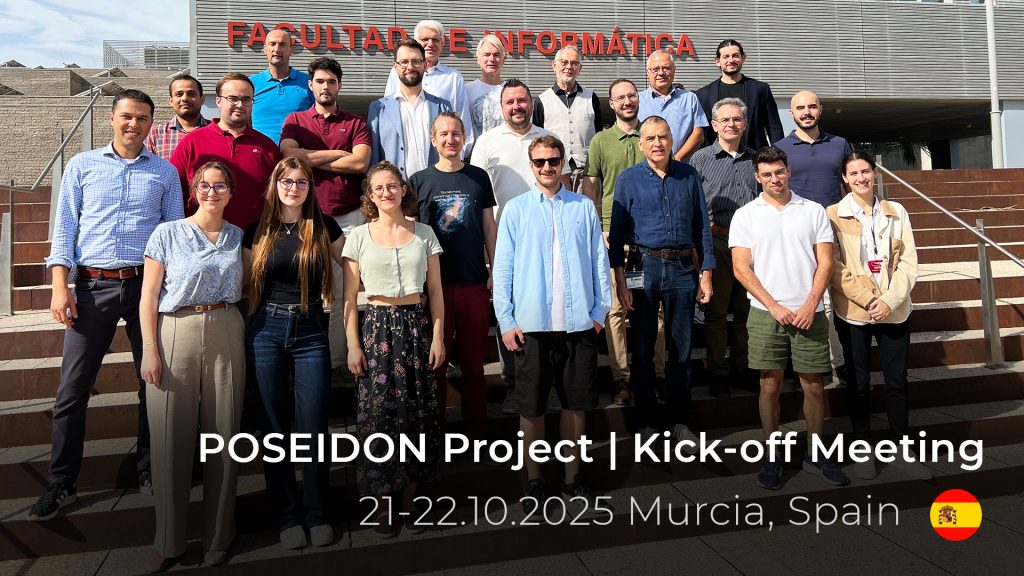
We are proud to announce that Quantum Blockchains has joined the POSEIDON Project (POst-quantum SEcure dIgital iDentities for eurOpean solutioNs): a major EU-funded initiative aimed at strengthening Europe’s cybersecurity and digital sovereignty.
The POSEIDON project advances the strategic European goal of achieving both a tangible and effective increase in cybersecurity and resilience, as well as fostering a more secure online environment across the EU. At its core lies the development of a secure and efficient transition from pre- to post-quantum cryptography, grounded in hybrid approaches as recommended by the European Commission.
Quantum Blockchains is one of 15 leading European partners participating in this ambitious effort. Our primary responsibilities include:
- Designing and providing the blockchain trust layer, ensuring verifiable and tamper-resistant identity management
- Defining and specifying implementations of three key use cases demonstrating the practical application of post-quantum secure digital identities in real-world scenarios.
The kick-off meeting took place in the beautiful city of Murcia, Spain, hosted by the Department of Computer Science at the University of Murcia, setting a collaborative and visionary tone for the work ahead.
We are thrilled to contribute our expertise in quantum-secure architectures, blockchain technologies, and post-quantum cryptography to this pioneering European initiative shaping the future of trusted digital identity.
At this year’s TEDx Lodz (at Monopolis), our CEO delivered a thought-provoking talk titled “Why Human Agency Matters in the Quantum Age.” The presentation explored how the coming Quantum Revolution is not merely about faster hardware, but about a profound paradigm shift in how we think, design, and program, especially in the realms of cryptography and secure computation.
During his talk, he referenced Quantum Blockchains’ pioneering work on Y2Q (Years to Quantum) readiness and the company’s long-term vision for integrating post-quantum cryptography (PQC) and quantum-secure key distribution (QKD/pQKD) into practical industrial systems. In this context, he highlighted the foundational importance of Shor’s and Grover’s algorithms: the twin milestones that revealed both the power and the threat of quantum computation to classical security models.
“Quantum computing challenges not only our encryption, but our very concept of computation,” he noted. “Programming a quantum device means rethinking causality, reversibility, and information itself — and that demands human judgment, intuition, and imagination.”
The central message of the talk was clear:
As we enter the Quantum Age, technology alone is not enough. Human agency — the ability to understand, interpret, and guide these systems — remains the decisive factor that will determine how quantum technologies serve human goals.

Łódź, September 20, 2025 – The annual plenary meeting of the Quantum Cluster (Klaster Kwantowy) took place at the Institute of Physics of Lodz University of Technology (TUL). The meeting was chaired by Dr. Mirek Sopek, CEO of Quantum Blockchains and acting Chair of the session.
The most vibrant part of the discussion focused on the national strategy for quantum technologies, where participants debated how the Polish ecosystem can contribute to and benefit from the government’s policy directions. The exchange highlighted the importance of closer collaboration between academia, industry, and government to accelerate innovation and strengthen Poland’s position in the European and global quantum landscape.
The meeting reaffirmed the Quantum Cluster’s role as a central platform for dialogue, coordination, and joint initiatives in Poland’s rapidly growing quantum technology sector.

Łódź/Poznań, September 2025 – Dr. Mirek Sopek, CEO of Quantum Blockchains, will take part in the high-level panel “Technological Sovereignty of Europe. Wartime Experiences” at the Common Future 2025 conference (common-future.pl).
The panel will address one of the most pressing challenges facing Europe today: how to strengthen its technological sovereignty in times of geopolitical tension and conflict. Drawing on the lessons from Ukraine’s wartime innovation and resilience, the discussion will explore Europe’s path toward independence in critical areas such as quantum technologies, secure communications, artificial intelligence, and cloud infrastructure.
“Europe cannot rely on imported trust. Technological sovereignty means building our own resilient systems, tested under the toughest conditions, and prepared for the quantum future,” said Dr. Sopek.
The Common Future conference gathers leaders from business, government, and academia to discuss Europe’s future in the face of global challenges. This year’s edition emphasizes sovereignty, resilience, and innovation as key drivers of Europe’s security and prosperity.
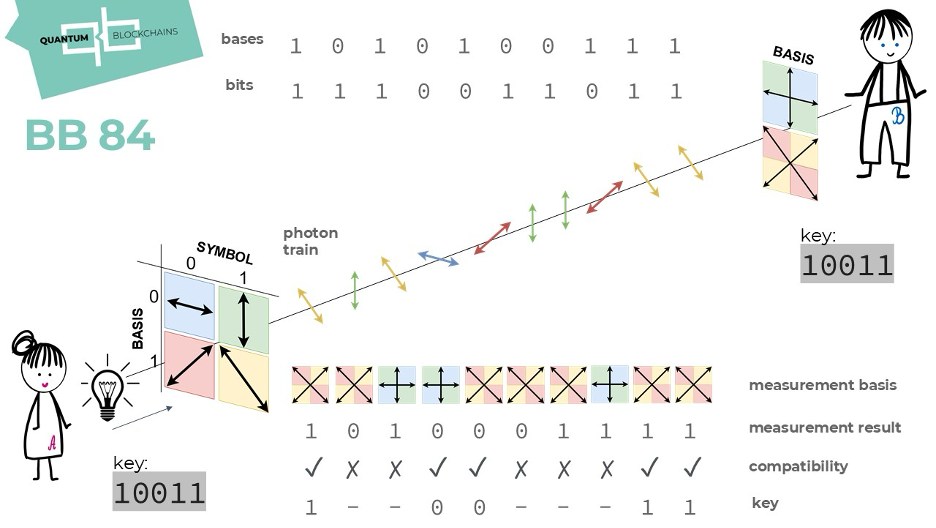
Lodz, September 8th, 2025 – Quantum Blockchains is proud to announce a significant milestone: the successful integration and delivery of a fully functional Quantum Key Distribution (QKD) simulation for Amazon Braket on AWS. This code base enables researchers and developers to simulate the groundbreaking BB84 protocol using Amazon’s quantum computing infrastructure. The full source code is available in the AWS Samples GitHub repository: AWS Github
This achievement is complemented by a highly acclaimed blog post, “Implementing BB84 Quantum Key Distribution on Amazon Braket: A practical guide” co-authored by our scientist, Miriam Kosik, alongside Juan Moreno from Amazon, and featured on the AWS Quantum Technologies Blog on September 8, 2025.
What makes this special
Industry Impact: BB84 is the foundational QKD protocol developed in 1984, offering security grounded in quantum physics rather than mathematical hardness. The AWS blog post outlines how to implement its simulation on Amazon Braket, from quantum state preparation and measurement to sifting, error estimation, and key reconciliation.
Our Contribution: By delivering this simulation code, our team empowers organizations and academia to explore the QKD foundations practically within AWS’s scalable quantum environment. This accelerates exploration into quantum-safe cryptography for real-world application.
Spotlight: Dr. Miriam Kosik
Miriam Kosik: PhD in Physics (Nicolaus Copernicus University, 2022), is advancing quantum cryptography and related technologies. In her co-authored AWS blog post, Miriam brings scientific rigor and practical guidance to a critical emerging technology.
Looking Ahead
With this simulation now publicly available, developers can:
-
Experiment with QKD protocols in a high-quality AWS environment.
-
Build awareness of quantum cryptography and evaluate the quantum resilience of cryptographic systems.
-
Inspire future innovations in quantum encrypting technologies.